
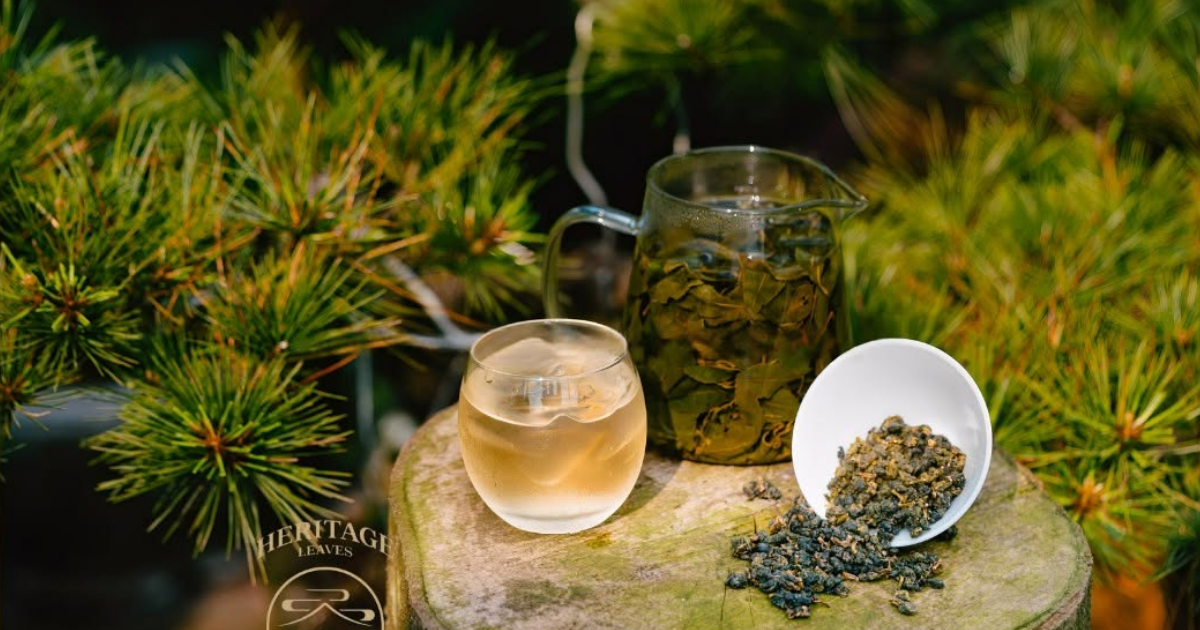
For many tea drinkers, choosing tea starts with a simple question: what makes one cup taste noticeably better than another?
The answer is rarely just the name of the tea. Leaf quality, processing, storage, brewing space, water temperature, and steeping time all influence what eventually reaches the cup. This is where loose leaf tea offers a different experience.
Instead of focusing only on convenience, loose leaves allow you to see the tea itself, adjust the way you brew it, and experience how its aroma and flavor change across multiple infusions. For Taiwanese oolong tea in particular, that extra room to unfold can reveal much more of the character created during growing and processing.
What Is Loose Leaf Tea?
Loose leaf tea simply refers to tea leaves that are brewed freely rather than being enclosed in a conventional tea bag.
The format itself does not automatically guarantee high quality tea. Loose leaves can vary greatly in origin, grade, freshness, and craftsmanship.
However, the format gives tea drinkers something valuable: visibility.
You can examine the shape, size, color, and condition of the dry leaves. Once brewed, you can also see how they expand and how intact the leaves remain.
For carefully processed oolong tea, these details can tell part of the story before you even take the first sip.
Why Can Loose Leaf Tea Taste Different?
Tea leaves need contact with water to release their aroma and flavor compounds.
When leaves have enough room to expand, water can circulate around them more freely. This is particularly relevant for rolled Taiwanese oolong tea, whose tightly formed leaves may gradually open into much larger leaves during brewing.
The result is not simply “stronger tea.”
A well-brewed loose leaf tea can reveal different layers of aroma, sweetness, body, and finish as the leaves continue to open.
Depending on the tea, one infusion might emphasize floral notes, while another brings forward fruit, roasted aromas, or a softer lingering sweetness.
That evolving character is one reason loose leaf brewing remains an important part of the fine tea experience.
Loose Leaf Tea vs. Tea Bags: Is One Always Better?
Not necessarily.
Tea bags are convenient, portable, and useful when time or equipment is limited. Loose leaf tea provides greater flexibility and makes it easier to control variables such as leaf quantity, steeping time, and water volume.
The more important distinction is the quality of the tea inside.
A beautifully packaged loose leaf tea is not automatically superior, just as tea in an individual sachet is not automatically low quality.
When choosing tea, consider the source of the leaves, processing, freshness, storage, and how transparently the producer communicates about the product.
Packaging should protect the tea. It should not be the only reason a tea appears premium.
Why Taiwanese Oolong Works Especially Well as Loose Leaf Tea
Many Taiwanese oolongs are carefully rolled during processing.
Those compact leaves may look small when dry, but once they meet hot water, they begin to loosen and expand. Giving them enough brewing space allows this transformation to happen naturally.
This makes loose leaf brewing particularly useful for exploring Taiwanese oolong tea.
Depending on oxidation and roasting, the resulting cup may offer floral, fruity, honeyed, creamy, toasted, or roasted characteristics.
Lighter oolongs may feel fresh and aromatic, while darker styles can offer greater warmth and depth. Black oolong tea may bring an even richer roasted character.
Rather than reducing these teas to a single flavor description, loose leaf brewing allows their complexity to unfold gradually.
What Creates a Smooth Flavor in Tea?
A smooth flavor tea is not simply one that tastes weak.
Smoothness is about balance. Aroma, body, sweetness, bitterness, astringency, and finish should work together without one element becoming unnecessarily harsh.
Several factors contribute to this experience.
The growing environment influences the raw leaf. Harvesting determines which leaves enter production. Oxidation and roasting shape aroma and depth. Storage protects the finished tea from moisture and unwanted odors.
Brewing matters as well.
Even an excellent tea can become overly bitter or astringent if too many leaves are steeped for too long at an unsuitable temperature.
A smoother cup therefore begins long before brewing, but the person preparing the tea still has considerable control over the final result.
What Does “Silky Flavor” Mean in Tea?
When people describe tea as silky, they are usually talking about texture rather than a literal flavor.
A silky tea feels smooth and continuous across the palate. It may have body without feeling heavy and leave a clean, lingering finish rather than an abrupt bitterness.
This sensation is sometimes described as mouthfeel.
High quality oolong tea can be particularly interesting in this respect because aroma and texture often develop together. A tea might initially seem floral or roasted, but its lasting impression comes from how comfortably it moves across the palate.
Words such as “smooth” and “silky” are subjective, but they can still be useful when they describe an actual sensory experience rather than being used only as marketing language.
Does Expensive Tea Always Taste Better?
Price alone cannot tell you whether you will enjoy a tea.
Tea pricing can reflect many factors, including growing region, harvest season, production scale, labor, processing skill, rarity, packaging, and distribution.
Some expensive teas are prized for characteristics that experienced tea drinkers appreciate, but that does not mean every drinker will prefer them.
A better approach is to look for value in the cup.
Does the tea have a pleasant aroma? Does the flavor remain balanced? Can it be steeped more than once? Do you enjoy its texture and finish?
The best tea for everyday drinking is ultimately one whose quality and flavor justify its place in your routine.
How to Brew Loose Leaf Tea
There is no single brewing formula that works perfectly for every tea.
Start with the brewing recommendations provided for the tea you are using, then adjust according to taste.
If the tea feels too light, you can use more leaves or extend the steep slightly. If it becomes too intense or astringent, try a shorter infusion or adjust the water temperature.
For rolled oolong, remember that the leaves need room to expand. A teapot, gaiwan, cup with a large infuser, or other brewing vessel that allows sufficient circulation can work well.
Most importantly, pay attention to the cup rather than treating brewing instructions as rigid rules.
Tea is meant to be adjusted to the person drinking it.
Can Loose Leaf Tea Be Steeped More Than Once?
Many loose leaf oolong teas can be steeped multiple times.
In fact, repeated infusions are one of the easiest ways to experience how a tea changes.
The first infusion may emphasize fragrance. Later infusions may reveal more sweetness, body, or subtle background notes as the leaves fully open.
The exact number of enjoyable infusions varies according to the tea, brewing ratio, water temperature, and personal preference.
Rather than asking how many times a tea “should” be brewed, continue until the cup no longer delivers the flavor you enjoy.
Can You Cold Brew Loose Leaf Tea?
Yes. Loose leaf tea can also be prepared as cold brew.
Cold brewing extracts tea differently from hot water and often creates a softer, refreshing profile. This makes it especially useful for people who prefer a gentle cup or want an alternative way to enjoy Taiwanese oolong.
Place the tea leaves in cold water, refrigerate, and allow them time to infuse. Because different teas extract at different rates, the amount of leaf and brewing time can be adjusted according to preference.
The same loose leaf tea can therefore offer noticeably different experiences depending on how it is prepared.
How to Choose High Quality Loose Leaf Tea
A good tea purchase should involve more than choosing the most attractive package.
Look for useful information about the tea itself, such as its origin, style, processing, and recommended brewing method. When possible, choose sellers who communicate clearly about sourcing and quality rather than relying only on broad claims such as “premium” or “luxury.”
Once you brew the tea, judge it with your own senses.
High quality tea should offer a drinking experience worth returning to. Aroma should feel expressive rather than flat, flavor should have balance, and the finish should invite another sip.
For oolong in particular, it can also be useful to observe how the leaves develop over several infusions.
Loose Leaf Tea as an Everyday Tea Experience
Loose leaf tea does not need to be reserved for formal tea ceremonies or special occasions.
At its simplest, it is another way to slow down enough to notice what is in your cup.
For Heritage Leaves, that experience begins with the tea itself. Taiwanese tea carries the influence of its growing environment, processing decisions, and generations of accumulated knowledge. Brewing the leaves with enough space and attention allows more of that work to become visible.
Whether you prefer a bright Taiwanese oolong tea or the deeper character of black oolong tea, the goal is not to make tea complicated.
It is to give good leaves the opportunity to show what they can offer.
FAQ: Loose Leaf Tea
Is loose leaf tea always higher quality than tea bags?
No. Format alone does not determine quality. Origin, leaf quality, processing, freshness, and storage are more meaningful indicators. Loose leaf tea does, however, make it easier to examine the leaves and control the brewing process.
Do I need special equipment for loose leaf tea?
No. A teapot or gaiwan can be useful, but a mug with a sufficiently large infuser can also work. The important thing is giving the leaves enough space to interact with the water.
Why does loose leaf oolong expand so much?
Many Taiwanese oolongs are rolled during processing. Once exposed to water, the compact leaves gradually unfurl, sometimes expanding several times beyond their dry size.
Can I reuse loose leaf tea?
Many oolong teas are suitable for multiple infusions. Flavor and aroma may change with each steep, so repeated brewing can become part of the tasting experience.
Is loose leaf tea suitable for cold brew?
Yes. Many oolong teas work well as cold brew and can develop a smooth, refreshing character when infused slowly in cold water.