
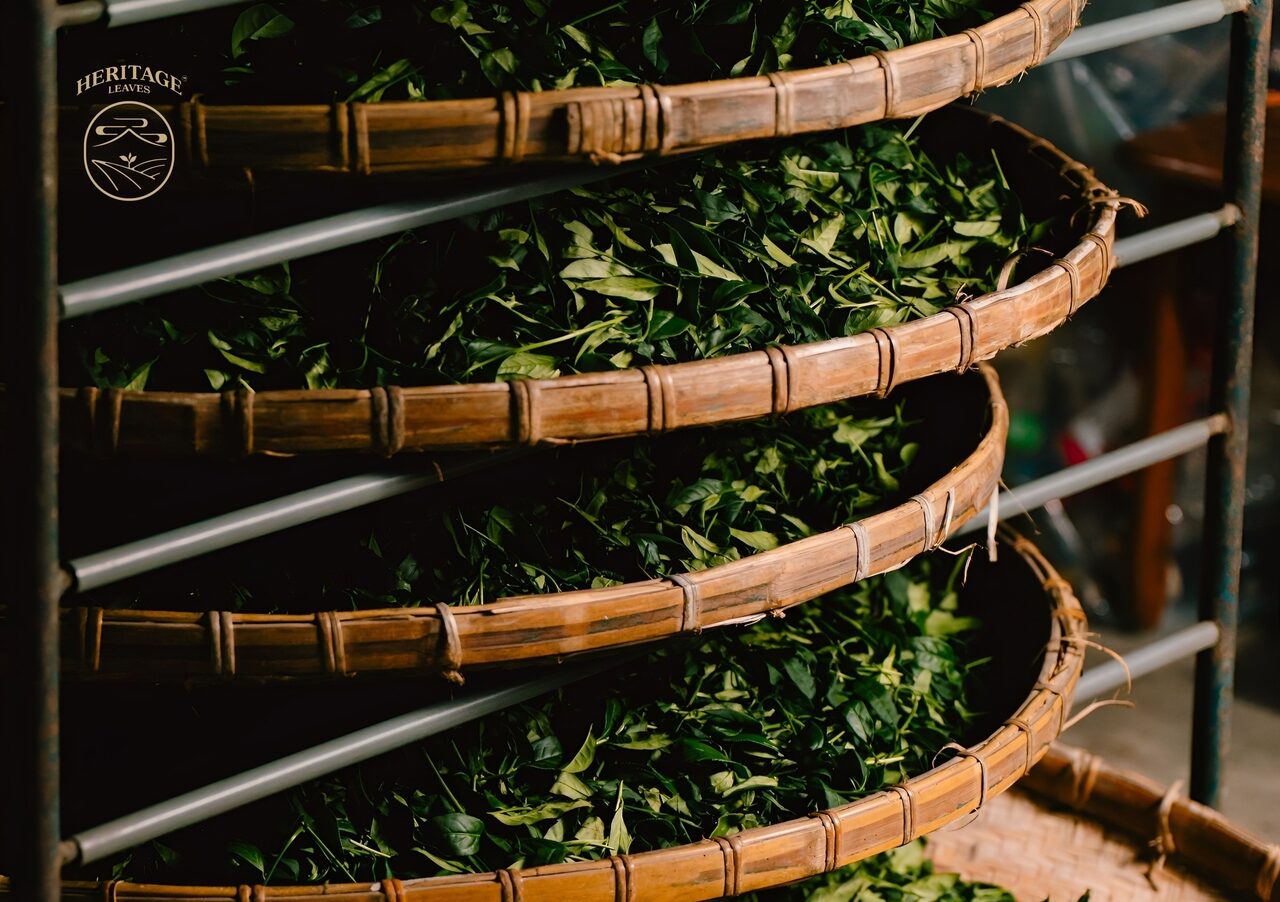
Discover the Balance Between Green and Black — The Taiwanese Way of Tea
Tea is one of the world’s oldest rituals — a symbol of calm, connection, and craft.
From grassy green teas to bold black teas, every type tells a story of how leaves meet air, fire, and time.
But between the light and the dark lies a tea that captures the best of both worlds: Oolong Tea — and its deeper, honeyed sibling, Black Oolong.
These Taiwanese specialties represent centuries of refinement and patience, balancing freshness with depth, elegance with strength.
Here’s how they differ not only from each other, but also from other famous teas around the world.
1. The Basics: How Tea Types Are Defined
All true teas — green, oolong, black, white, and puer — come from the same plant: Camellia sinensis.
The secret that separates them isn’t the leaf, but oxidation — the natural reaction that occurs when tea leaves interact with air after being picked.
- Green tea is unoxidized: it’s heated right after picking to stop fermentation, preserving a light color and grassy aroma.
- Black tea is fully oxidized: it darkens completely, producing a deep red liquor and strong, malty taste.
- Oolong tea, as the name suggests, lives in the middle — partially oxidized, offering complexity that no other tea quite matches.
And within this middle ground, Taiwan’s Black Oolong pushes the boundaries even further.
2. Oolong Tea — The Harmony of Nature and Skill
Oolong Tea is known as a “semi-fermented” tea, with oxidation levels between 20% and 70%.
This gives it a unique duality: the floral freshness of green tea and the sweetness of black tea.
In Taiwan, Oolong isn’t just a drink — it’s a national art form.
Each region crafts a slightly different expression:
- High Mountain Oolong (Gaoshan) — smooth and floral, grown above the clouds.
- Dong Ding Oolong — roasted and nutty, with layers of orchid and toasted caramel.
The secret lies in the making.
After picking, the leaves are gently withered in sunlight, shaken to bruise the edges, and left to partially oxidize.
Then, tea masters fire and roll the leaves by hand, shaping them into tight little spheres.
When steeped, they slowly unfurl — releasing wave after wave of floral, creamy, and fruity aromas.
It’s a tea that invites you to pause and breathe between sips.
3. Black Oolong — The Deep, Honeyed Evolution
Black Oolong (sometimes called Red Oolong in Taiwan) takes everything Oolong does and pushes it further.
It’s heavily oxidized — up to 85%, bridging the gap between traditional Oolong and full-bodied black tea.
The result? A cup that glows deep amber and tastes like honey drizzled over roasted fruit.
The aroma is rich and sweet, with warm caramel undertones and a silky texture that lingers.
While Oolong is bright and refreshing, Black Oolong feels grounded, mature, and comforting.
It’s the tea for slow afternoons, after meals, or moments when you want something smooth and satisfying without bitterness.
What makes it distinctly Taiwanese is the balance: never too smoky, never too heavy — just perfectly round and mellow.
4. Compared to Green, Black, and White Teas
To appreciate Oolong and Black Oolong fully, it helps to see where they sit among the tea family:
| Tea Type | Oxidation Level | Flavor Profile | Color | Ideal Mood |
|---|---|---|---|---|
| Green Tea | 0–10% | Grassy, vegetal, slightly astringent | Pale green | Morning freshness |
| White Tea | 5–15% | Soft, light, slightly floral | Very pale gold | Quiet reflection |
| Oolong Tea | 20–70% | Floral, creamy, fruit-forward | Golden amber | Daily balance |
| Black Oolong | 70–85% | Honey, ripe fruit, caramel | Deep amber-red | Afternoon calm |
| Black Tea | 90–100% | Bold, malty, full-bodied | Dark red-brown | Morning energy |
In short:
- Green tea is light and lively.
- Black tea is strong and robust.
- Oolong bridges them with elegance.
- Black Oolong adds depth — smooth, sweet, and uniquely Taiwanese.
5. The Craft: Why Taiwanese Tea Is Different
Taiwan’s subtropical climate, misty mountains, and mineral-rich soil make it a paradise for semi-fermented teas.
But what truly sets Taiwanese tea apart is the human touch — the mastery of fire, air, and timing.
From picking to packaging, the process takes two to three days:
- Picking: Hand-harvested buds and young leaves.
- Withering: Leaves rest under sunlight to reduce moisture.
- Tossing: Gently shaken to start controlled oxidation.
- Fixing: Heated to stop fermentation at the desired level.
- Rolling: Twisted into signature ball shapes.
- Roasting: Finished with light to medium heat to refine aroma.
This combination of nature and precision gives Oolong its floral elegance and Black Oolong its honeyed depth.
Each cup reflects patience — the unhurried rhythm of mountain life.
6. Brewing Guide — Let the Leaves Tell Their Story
You don’t need a teapot to enjoy fine loose-leaf tea — just patience and good water.
Oolong Tea
- Water: 212 °F (100 °C)
- Steep: 2–3 minutes
- Notes: floral, bright, smooth
Black Oolong
- Water: 185–195 °F (85–90 °C)
- Steep: 1–2 minutes (hot) or 6–8 hours (cold brew)
- Notes: amber color, honey-caramel aroma, mellow finish
As the leaves open, they’ll slowly sink.
Refill your cup 2–3 times — each infusion reveals a new side of the tea’s personality.
7. Finding the Tea That Fits You
- If you love freshness, clarity, and light floral notes — choose Oolong.
It’s perfect for daily drinking, meditation, or afternoon work breaks. - If you prefer warmth, sweetness, and a smooth caramel finish — choose Black Oolong.
It pairs beautifully with desserts or as a comforting evening tea.
Both are ideal for those who want more nuance than green tea but less heaviness than black tea — the middle path of flavor and calm.
8. A Taste of Taiwan in Every Cup
Oolong and Black Oolong are more than teas; they’re an expression of balance — between nature and human craft, between freshness and depth.
Every leaf carries the breath of Taiwan’s mountains, the patience of its makers, and the stillness of the mist.
Heritage Leaves invites you to slow down and rediscover calm — one cup at a time.
From the mountains of Nantou, Taiwan.